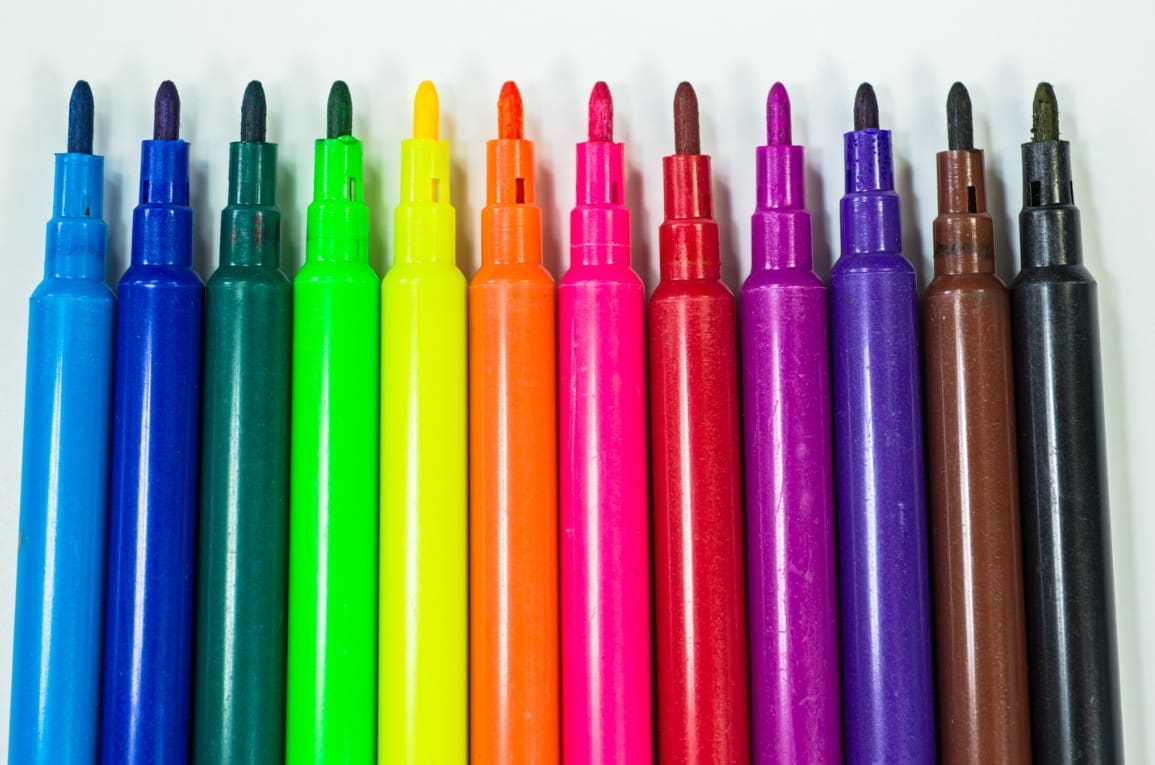

Can coloured pens, notebooks and handwriting help you write? Discover how stationery can support creativity, story clarity and writing momentum when you feel stuck.
Have you ever walked into a stationery shop and felt something inside you wake up?
You see the coloured pens, the highlighters, the sticky notes, the notebooks, the fresh blank pages, and suddenly there is this little spark of possibility. Like maybe this pen, this colour, this beautiful new page might help you find your way back into the story.
And maybe you have judged yourself for that. Maybe you have thought, why am I buying another notebook when I should be writing the book?
But what if that pull toward coloured pens and stationery is actually telling you something about how your creative mind works?
What if writing by hand, using colour, opening a notebook, or spreading your ideas across sticky notes can help your brain access the book in a different way?
This is not about abandoning your laptop. Most writers today draft on a computer, whether that is in Word, Scrivener, Google Docs, Atticus, or another writing program. The manuscript itself often lives on a screen, in the same font, in the same black text, inside the same document.
And that is completely fine.
But sometimes, when your writing feels flat, heavy, tangled, or too much like a task, coloured pens and handwriting can become a doorway back into creativity.
Why Writers Love Stationery
So many writers love stationery because stationery is full of beginnings.
Every blank notebook feels like a door. Every coloured pen feels like a promise. Every sticky note feels like a tiny, moveable piece of possibility. There is something about standing in front of those shelves that speaks to the part of you that still believes this book can come alive.
And that matters.
Because writing can become very serious, especially when you have been stuck for a while. When the manuscript has been dragging on, when the middle has become messy, or when you have started attaching heavy meaning to your progress, the writing can begin to feel tight.
You sit down and instead of feeling curious, you feel pressure. You tell yourself you should be further along. You should have figured this out by now. You should be able to sit down and simply write.
And that kind of thinking can drain the life out of the process.
Stationery often brings back play. It brings back texture. It brings back curiosity. It reminds you that writing is also exploration. It is listening for what feels alive. It is allowing an idea to take shape before you demand that it make perfect sense.
For many writers, that is the missing piece.
They are trying to write from pressure, when their creativity actually needs invitation. They are trying to think their way through the book, when their imagination is asking for something more tactile, more visual, more alive.
So when you feel drawn to coloured pens, highlighters, notebooks, sticky notes, or index cards, pause for a moment and notice what that attraction is really pointing to.
Maybe you are craving a fresh start. Maybe you are craving beauty. Maybe you are craving a more physical relationship with your book. Or maybe your creative self is quietly saying, can we make this feel alive again?
That is information.
And it is worth listening to.
The Creative Brain Loves More Than Words on a Screen
Handwriting and colour can be powerful because they bring more of your body and senses into the writing process.
When you type, you press keys. When you write by hand, your hand shapes the letters. Your eyes follow the marks on the page. Your body feels the movement. Your mind chooses the words. There is a whole sensory and motor experience happening at the same time.
And for writers, that matters.
Creativity is not only a thinking process. It is also visual, physical, emotional, intuitive, and sensory. Sometimes an idea does not arrive because you have thought harder. Sometimes it arrives because you have changed the way you are accessing it.
That is where a notebook, a coloured pen, and a blank page can become incredibly useful.
Some writers genuinely draft entire manuscripts by hand across several notebooks, then type the manuscript into a word processor afterwards. For them, the notebook becomes the drafting space, and the typing becomes the first layer of revision.
But that is not what every writer needs to do.
You may never handwrite a full chapter. You may never handwrite a full scene. You may mostly draft on your laptop. But if you are stuck, if you are brainstorming, if a scene feels tangled, or if you can feel there is an idea there but you cannot quite access it through the keyboard, handwriting can be a beautiful technique to pull out of your writer’s toolkit.
You can open a notebook and use a coloured pen to ask, what is this scene really about?
You can write messy notes about what you already know.
You can use another colour to capture the questions.
You can underline the words that feel alive, circle the phrase that surprises you, draw arrows between ideas, or highlight the one sentence that suddenly feels important.
And when you do that, you are not just making your notes look pretty. You are changing the state you are writing from.
You are shifting out of the tight, linear, output-focused energy of the blinking cursor and into a more spacious, physical, creative process.
Sometimes that is enough to open the next doorway.
How Colour Can Help You See the Story Differently
Colour can help writers make invisible ideas visible.
When everything is sitting inside your head, it can feel like one big tangled ball of thought. Character motivation, plot problems, emotional beats, structural questions, setting details, and random sparks of inspiration can all blur together.
Colour gives those threads shape.
A highlighter can show you where the energy is. A coloured pen can separate what you know from what you are still questioning. Sticky notes can help you physically move ideas around until they begin to make sense.
This does not need to become a complicated colour-coding system. In fact, for many writers, overly elaborate systems become another form of procrastination. You do not need twenty colours, a perfect legend, or a beautiful planning spread worthy of Instagram.
You just need enough colour to help your brain notice the difference between types of thoughts.
For example, one colour might be for what you already know. Another might be for questions. Another might be for sparks, meaning the ideas, images, emotional truths, or phrases that make something inside you lean forward.
That is enough.
The point is not to create a perfect page. The point is to give your mind more to respond to.
When Stationery Becomes a Writing-State Cue
One of the hardest parts of writing is often the shift from ordinary life into the creative world.
You may be answering emails, folding laundry, working, caring for people, rushing through your day, and then suddenly expecting yourself to drop into your manuscript on command.
That is a big shift.
A colour cue can help bridge it.
You open the notebook. You pick up the pen. You see the colour you have been using for this story. And your mind begins to recognise, this is where we go now.
This is the world of the book.
This is the page.
This is the doorway.
Over time, simple physical tools can become part of your writing ritual. The notebook, the pen, the colour, the texture of the paper, the movement of your hand across the page can all begin to signal to your brain that creative work is beginning.
That does not mean the tool creates the writing for you. It means the tool helps you enter the state where writing becomes easier to access.
And that can be incredibly supportive, especially if your writing sessions often begin with friction.
Tools, Not Rules
This is where your creative wiring matters, because the same tool will not work the same way for every writer.
For some writers, colour is energising. For others, too much colour becomes overwhelming. For some, handwriting opens up the creative mind. For others, typing is the thing that creates momentum.
So rather than asking, what is the correct way to use coloured pens and notebooks, ask yourself a better question:
What do I need this tool to help me do?
Maybe you need the looseness of a notebook and a messy page. Maybe you need the clarity of a highlighter and one clear thread. Maybe you need the physical movement of writing by hand before you return to the keyboard.
Let the tool serve the stage you are in.
Early drafting may need play. The messy middle may need clarity. Revision may need structure.
And if coloured pens or handwriting feel useful in one stage but less useful in another, that is perfectly fine. You are not trying to become a different kind of writer. You are learning how to support the writer you already are.
When Stationery Becomes Avoidance
Now, there is one important thing to name.
Stationery can support your writing. It can also become a beautiful hiding place.
If buying the notebook helps you write, wonderful. If buying the notebook becomes the thing you do instead of writing, it may be time to pause and ask what is really happening.
The same goes for setting up systems, rewriting notes, organising pens, or redesigning your writing board for the fifth time. Those things can be genuinely supportive. They can also become a soft, pretty form of avoidance.
You will usually know the difference by what happens afterwards.
A supportive tool leads you back to the book. Avoidance keeps you circling around the book.
So the coaching question is simple:
Does this tool help me enter the writing, or does it help me stay beside it?
That question is there to bring you back into self-honesty, without shame.
Sometimes the writer in you reaches for stationery because you are excited. Sometimes you reach for it because the next scene feels hard. Both are human.
The invitation is to use the tool consciously.
Buy the beautiful pen. Open the gorgeous notebook. Use the colour that makes your creative heart happy. And then let it lead you to the page.
Let the tool become a doorway, not a detour.
A Simple Coloured Pen Practice to Try This Week
Choose one writing problem or creative question you are currently holding.
Maybe it is a scene you are unsure about. Maybe it is a character you cannot quite understand. Maybe it is a chapter you need to plan, or a non-fiction idea you are trying to shape.
Take a notebook or a blank page and choose three colours.
Use one colour for what you already know.
Use one colour for the questions.
Use one colour for the sparks. By sparks, I mean the words, images, possibilities, or emotional truths that make something inside you lean forward.
Then give yourself ten minutes.
Write by hand. Write messily. Draw arrows. Circle things. Highlight the sentence that surprises you. Let the page be imperfect. Let it be exploratory. Let it be a conversation between you and the book.
When the ten minutes are done, look back over the page and ask:
What is the colour showing me?
Not, what is the perfect answer?
Just, what is the colour showing me?
You may discover that you know more than you thought. You may discover that your biggest question is actually very specific. You may discover that one little spark is the next doorway into the scene.
And that may be all you need for your next writing step.
Coloured Pens Can Help You Write
So, can coloured pens help you write?
Yes, they absolutely can.
And not just coloured pens. Notebooks, highlighters, sticky notes, handwritten pages, and the simple act of physically moving a pen across paper can all become tools you reach for when you need to access the book differently.
They can bring play back into the process. They can turn invisible ideas into something you can see. They can help you notice what feels alive, what needs your attention, and what your next step might be.
Perhaps most importantly, they can remind you that writing is allowed to feel creative.
It is allowed to feel sensory. It is allowed to feel beautiful. It is allowed to feel like more than a task on your to-do list.
So this week, give yourself permission to reach for colour. Choose the pen. Open the notebook. Make the messy page. Follow the spark.
Because sometimes the thing that helps you write is not more pressure. Sometimes it is a doorway back into play, clarity, and connection with the story that is already waiting for you.
You are the vessel for the story. Let the words flow through you and onto the page.
Listen to the Podcast Episode
This article is based on an episode of Write The Darn Book, where we explore the mindset, craft, structure, and creative tools that help writers move through resistance and finish their books.
You can listen to the podcast on Apple Podcasts here:
Want to Understand How You’re Wired to Write?
If reading this made you realise that the way you brainstorm, plan, organise your ideas, and reconnect with your creativity might be deeply connected to your writing personality, this is exactly what we explore inside a Writing Personality Blueprint Session.
In a Blueprint Session, we look at how you are uniquely wired to write, what supports your creative flow, what tends to pull you into resistance, and what kind of writing process will actually work for your book, your personality, and your real life.
You can book your Writing Personality Blueprint Session at:
And if you would like to begin by discovering more about your own writing personality, you can take the free Writing Personality Quiz at:


